How to choose a Kanjivaram that is actually a Kanjivaram
Four checks you can do yourself: the border join, the zari, the reverse of the pallu and the weight.
The Suti Sancha team · · 6 min read
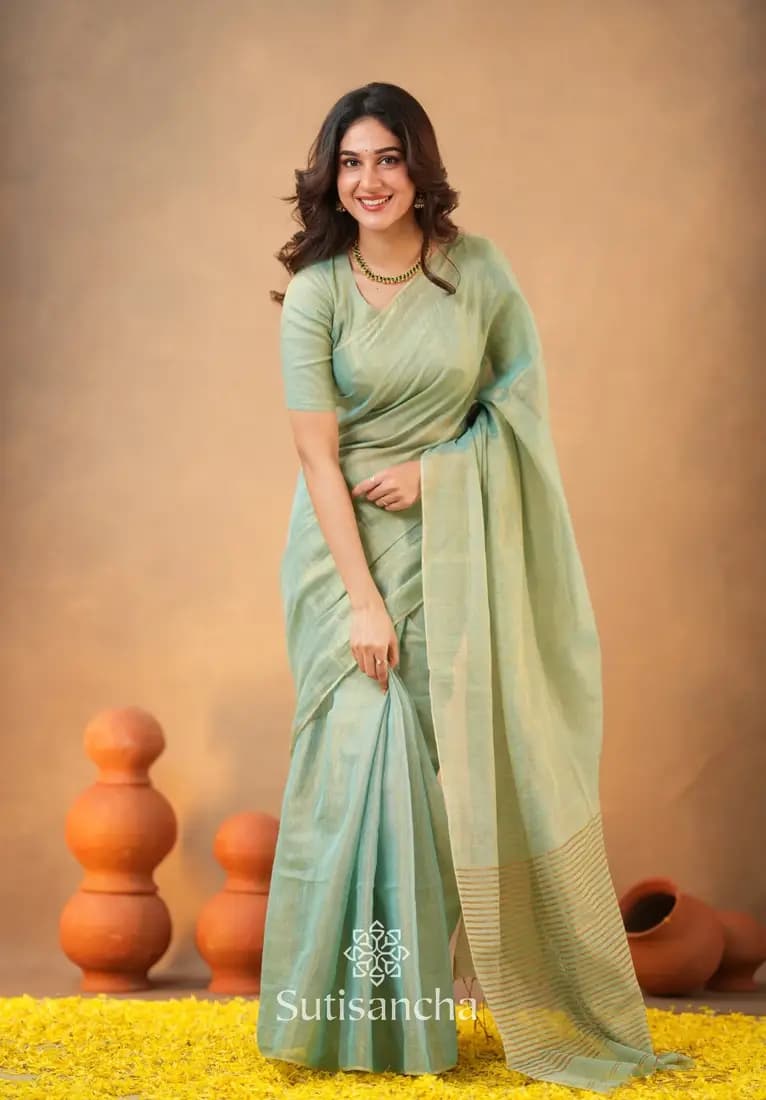
Most sarees sold as Kanjivaram are not woven in Kanchipuram, and some are not silk at all. You do not need a laboratory to narrow it down - four checks get you most of the way.
1. The border join
A real Kanjivaram border is woven separately and interlocked with the body by hand. That technique is called korvai, and the join is visible as a fine zigzag line if you hold the saree up to the light. A printed or power-loom border simply continues out of the body with no join at all.
2. The zari
Pull a single zari thread from the fringe and unwind it. Real zari is a flat metallic strip wound on a silk or cotton core; the core is usually orange or red. A plastic-core zari has a white or grey synthetic thread inside and feels springy.
3. The reverse of the pallu
Turn the pallu over. On a kadhwa or korvai weave you will see the ends of the motif threads - small floats, cut and finished. On a print the reverse is flat and pale. On a jacquard copy the reverse is a dense mat of carried threads.
4. The weight
A six-yard Kanjivaram with a real zari border weighs roughly 700 to 1,000 grams. Anything under 500 grams that claims heavy zari is not what it says it is.
What to ignore
Silk mark holograms can be bought. A bill that says "pure silk" means nothing on its own. The four checks above are harder to fake than paperwork.
Sarees mentioned in this article
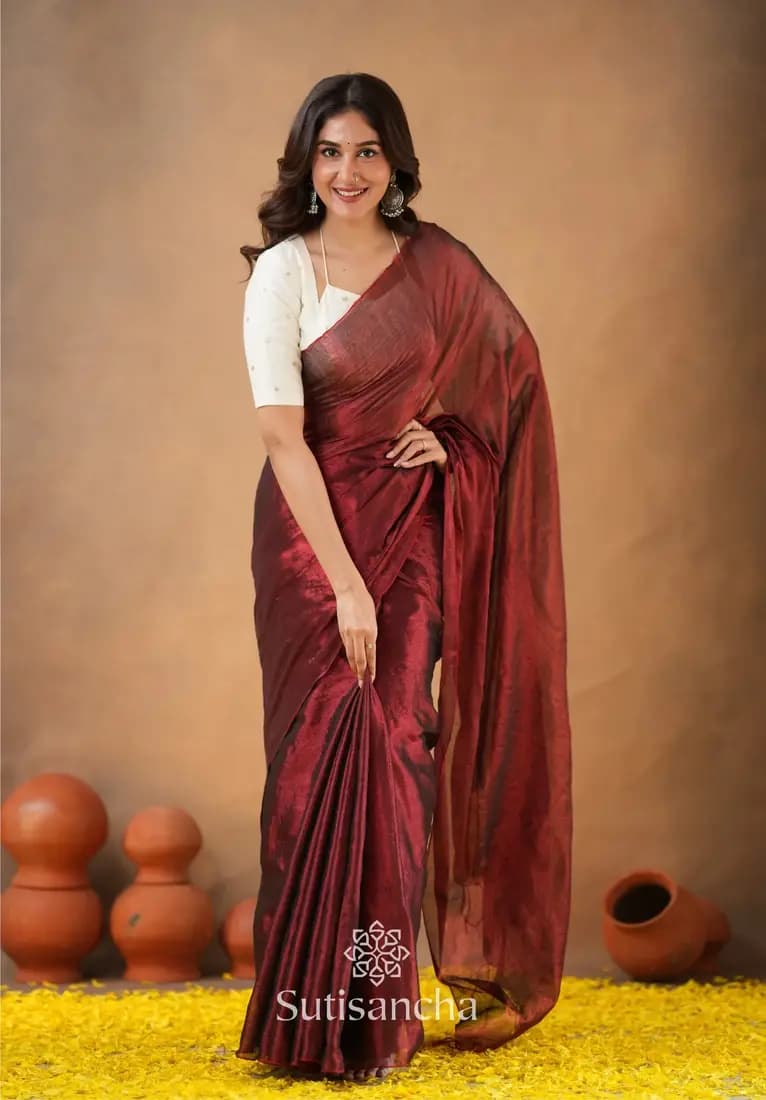
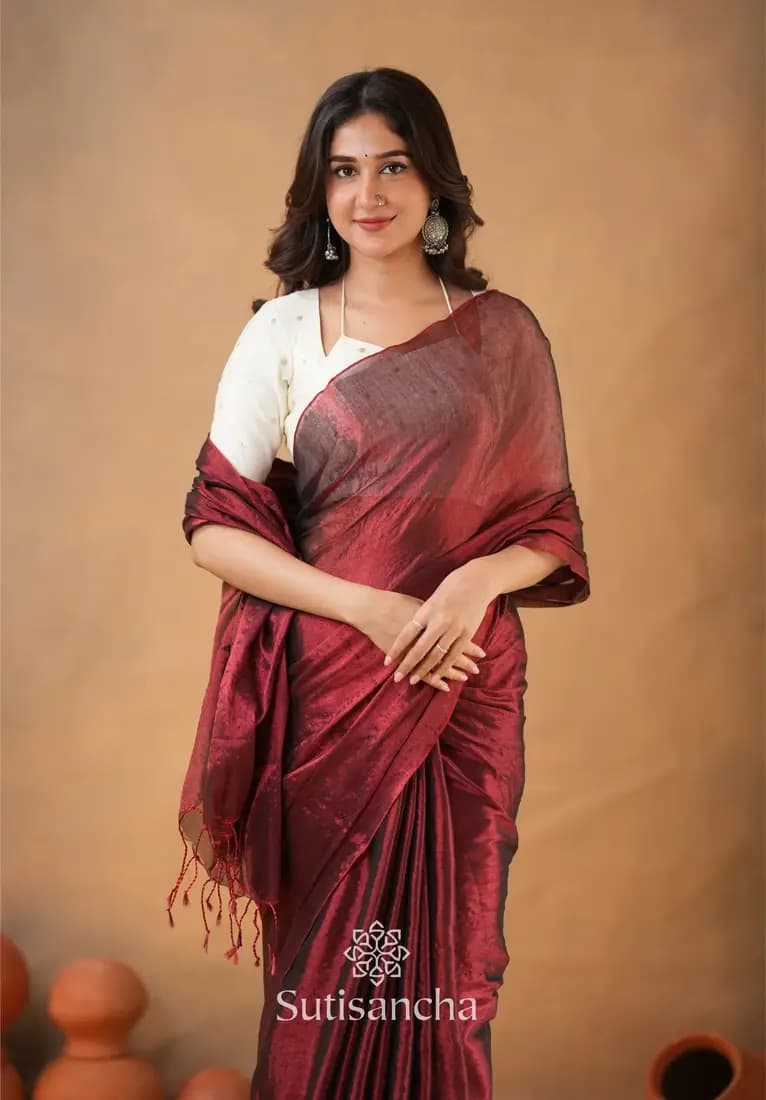 Hot selling
Kanjivaram Silk Saree in Deep Maroon with Gold Zari
14%off₹21,499.00INR
Original price ₹24,999.00INR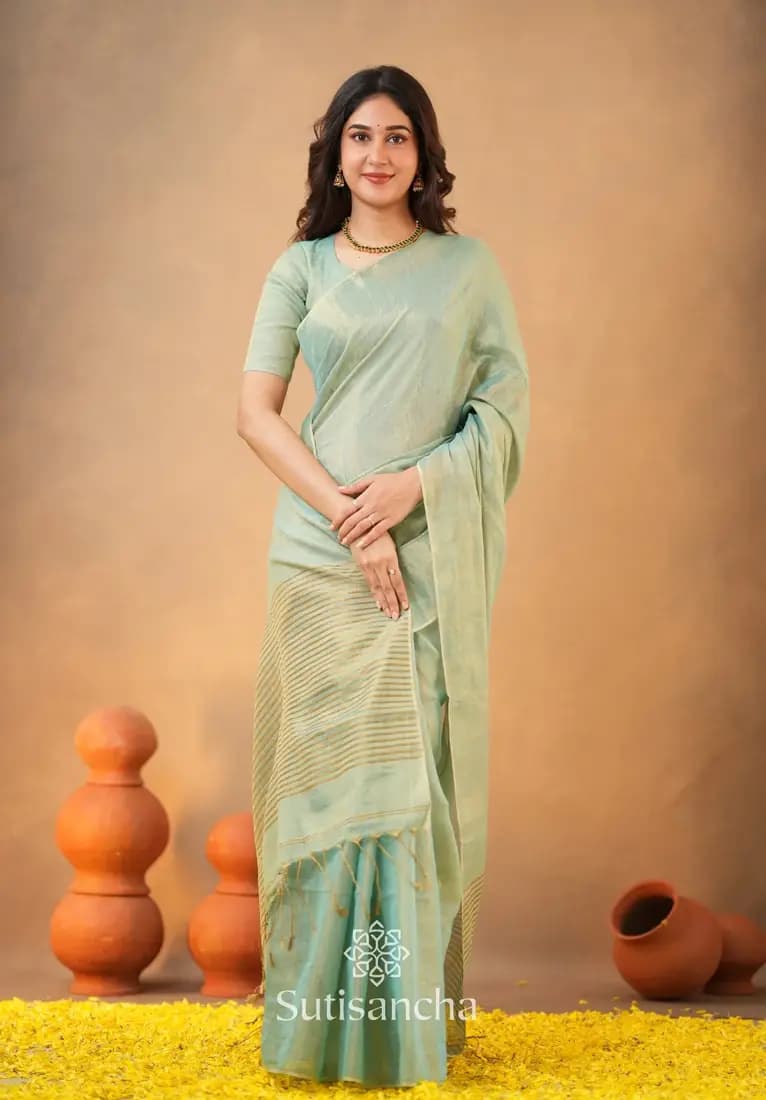 Hot selling
Kanjivaram Silk Saree in Mustard with Temple Border
12%off₹17,499.00INR
Original price ₹19,999.00INR