Nine ways to drape a saree, and when each one makes sense
The Nivi, the Bengali, the Coorgi, the Nauvari and five more - what each does for the fabric and the occasion.
The Suti Sancha team · · 8 min read
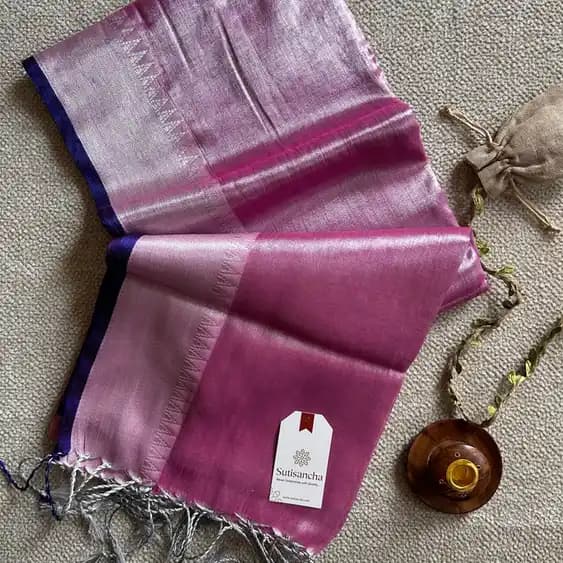
A drape is not decoration. It decides where the weight of the saree sits, how much the border shows and whether you can walk quickly in it.
Nivi
The default in most of India. Pleats at the front, pallu over the left shoulder. It suits almost every fabric and shows the pallu clearly, which is why it is the right drape for a brocade.
Bengali (aatpoure)
No pleats at the waist, pallu brought over the left shoulder, around the back and over the right. It carries a stiff cotton beautifully and keeps both hands free. Jamdani was practically designed for it.
Coorgi
Pleats tucked at the back, pallu pinned on the right shoulder. The most practical of the lot for moving about.
Nauvari
Nine yards, draped like trousers. Needs a saree woven to nine yards; a six-yard piece will not do it.
Which to pick
Heavy silk - Nivi, which lets the weight hang. Crisp cotton - Bengali or Coorgi, which both hold a stiff fabric. Sheer organza or Chanderi - Nivi with fewer, deeper pleats, so the drape does not read as bulk.
Sarees mentioned in this article
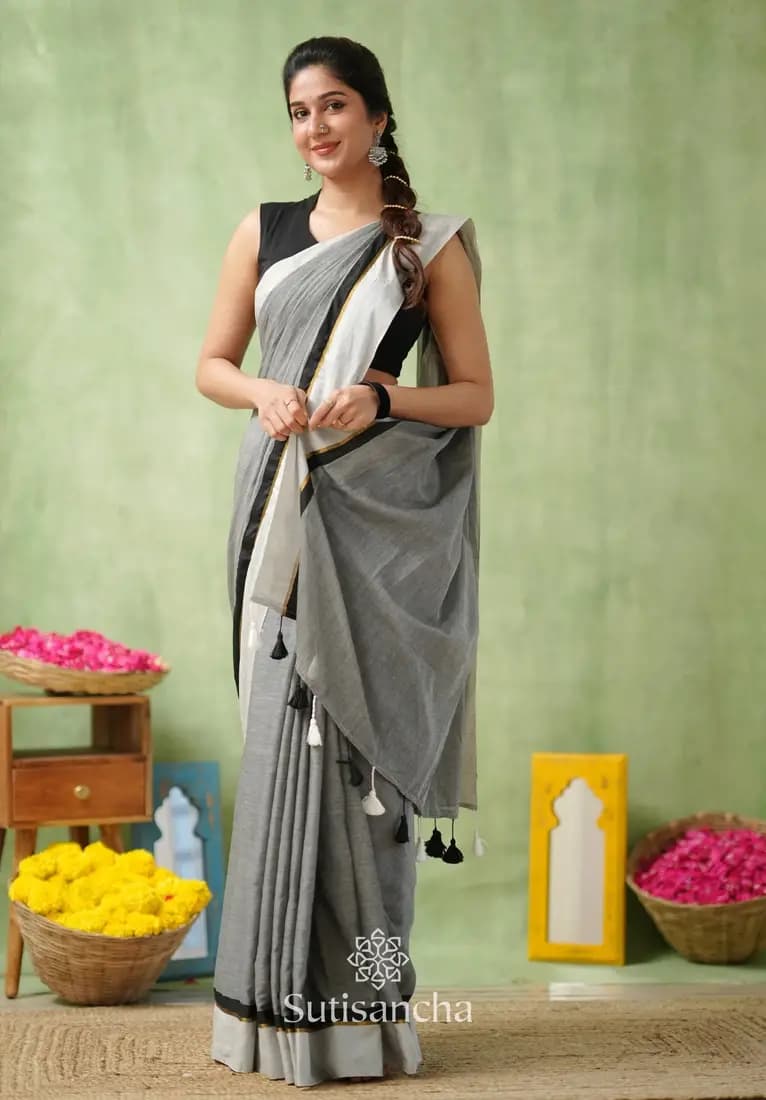
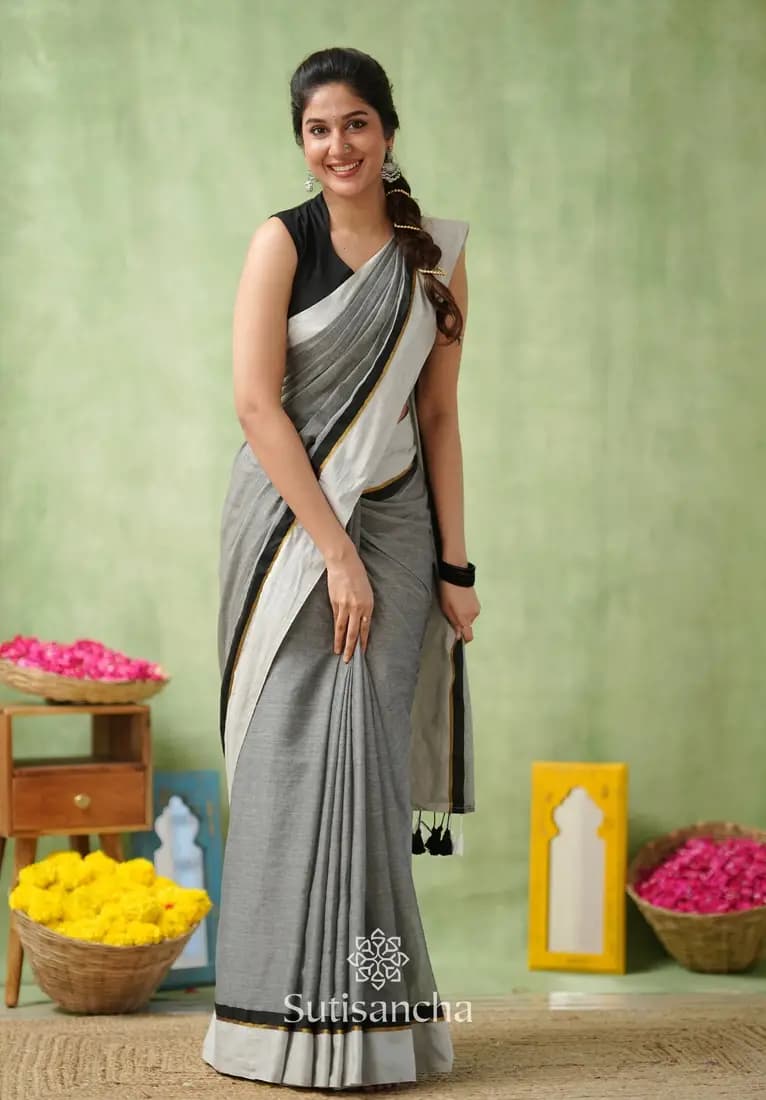 Hot selling
Handwoven Linen Saree in Charcoal with Ivory Stripe
21%off₹4,299.00INR
Original price ₹5,499.00INR
More from the journal
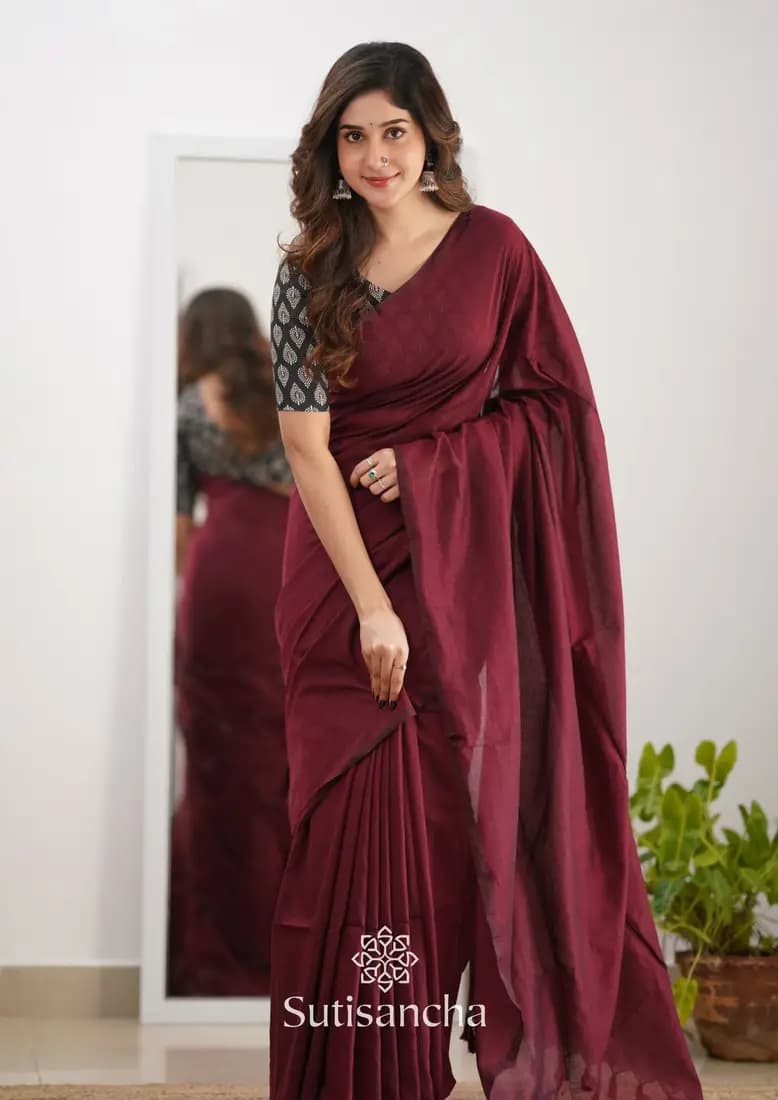
Washing a handloom cotton without ruining it
The first three washes matter most. Here is what to do, and what to never do.
27 Sept 2026 · 5 min read